Top 3 Football World Cup 2026 Hosts to Know
“Football is the ballet of the masses,” as the often-cited description goes, although the 2026 tournament may feel more like a logistical spreadsheet with shin pads. The United States is the #1 host f...

Top 3 Football World Cup 2026 Hosts to Know
“Football is the ballet of the masses,” as the often-cited description goes, although the 2026 tournament may feel more like a logistical spreadsheet with shin pads. The United States is the #1 host for overall access, venue capacity, and match volume. Canada ranks second for atmosphere and efficient city-based planning, while Mexico offers the strongest historical identity and value for traveling fans. The FIFA World Cup 2026 will be staged across 16 host cities in the United States, Canada, and Mexico, with 48 teams playing 104 matches. The competition begins on June 11, 2026, and the final is scheduled for July 19, 2026, at MetLife Stadium in East Rutherford, New Jersey. Before buying flights, check the official schedule, confirm venue locations, and compare travel distances carefully; your enthusiasm is admirable, but teleportation remains unavailable.
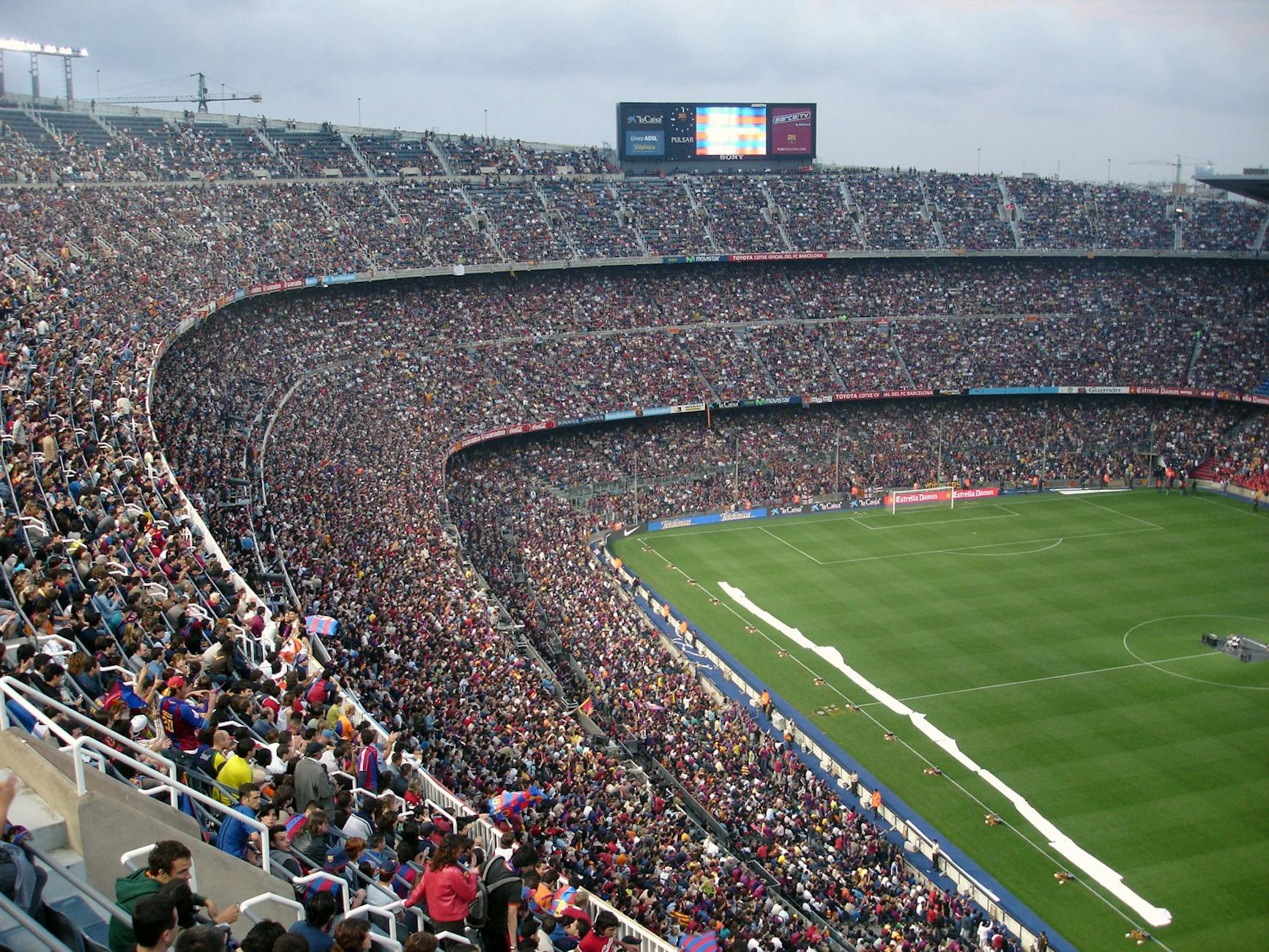
Photo by Pixabay on Pexels
The Top 3 at a Glance
The three host countries differ less in tournament authority than in practical fan experience: the United States carries the largest match allocation, Mexico brings the deepest World Cup tradition, and Canada provides a compact but still demanding northern route. FIFA has confirmed 16 host cities, including 11 in the United States, 3 in Mexico, and 2 in Canada. The distribution matters because the 2026 FIFA World Cup is not a single-country event with short transfers; it is a continental tournament spanning thousands of kilometres. According to FIFA’s official tournament information, the expanded competition will include 48 teams, a major change from the 32-team format used from 1998 through 2022. Coach’s Corner treats host selection as a planning question rather than a patriotic popularity contest, which is probably healthier for your wallet.
- United States — best overall: 11 host cities, the largest schedule footprint, and the final in New Jersey.
- Mexico — best for football heritage: Mexico City, Guadalajara, and Monterrey offer established World Cup culture.
- Canada — best value for focused travel: Toronto and Vancouver provide two strong bases without crossing the entire continent.
For the wider match calendar, readers should also consult our [Internal Link: 2026 World Cup match schedule guide], because kickoff times, group-stage pairings, and knockout venues are separate planning variables. Want a more structured tournament overview? Coach’s Corner provides daily match analysis, tactical notes, team statistics, and responsible pre-match coverage.
Learn more about the tournament landscape before planning your viewing schedule.
#1 United States: Best Overall
The United States is the best overall 2026 World Cup host because it contains 11 of the 16 venues, hosts the largest share of matches, and stages the final at MetLife Stadium in East Rutherford, New Jersey. Its advantages are scale, flight connectivity, hotel supply, and schedule choice, although internal travel distances can be severe. The country is therefore strongest for fans following several teams rather than one fixed national side.
The United States host cities are Atlanta, Boston, Dallas, Houston, Kansas City, Los Angeles, Miami, New York/New Jersey, Philadelphia, San Francisco Bay Area, and Seattle. FIFA’s match allocation gives American venues the dominant operational role, while Mexico and Canada handle important opening-round fixtures and knockout contests. The final will be played at MetLife Stadium, not in New York City proper, a distinction that matters because the stadium is located in East Rutherford, New Jersey, approximately 10 miles from Midtown Manhattan depending on the route. It is worth noting that “New York” in tournament branding may lead visitors toward the wrong airport, hotel, or rail plan, a small mistake capable of becoming a very expensive personality trait.
A specific planning edge is the time-zone spread. Seattle operates on Pacific Time, Miami on Eastern Time, and Dallas and Houston on Central Time, creating a three-hour domestic difference before international travel is even considered. Fans tracking live odds or match analytics should record kickoff times in the venue’s local zone and their home zone; otherwise, missing a 6 p.m. start because your phone remained loyal to another time zone is entirely possible. For a deeper tactical perspective, see the [Internal Link: World Cup team tactics and formations guide].
The United States also offers the broadest match-selection strategy. A supporter can base themselves in one region and attend multiple games, but “one region” needs a precise definition: Los Angeles to Seattle is roughly 960 miles by road, while Miami to New York is around 1,280 miles by road. Domestic flights may reduce travel time, yet airport transfers, security, and tournament demand add friction. The practical recommendation is to choose a maximum of two regional clusters, such as East Coast plus Midwest, rather than attempting a heroic coast-to-coast itinerary.

Photo by Ramaz Bluashvili on Pexels
What Makes Mexico the Best Host for Football Heritage?
Mexico is the best host for football heritage because it becomes the first country to stage World Cup matches in three editions: 1970, 1986, and 2026. Mexico City, Guadalajara, and Monterrey will represent the country, combining historic tournament identity with modern stadium infrastructure. The 2026 tournament will also make Mexico the first nation to host the men’s World Cup three times, a record that gives its fixtures unusual cultural weight.
Mexico’s host cities are Mexico City, Guadalajara, and Monterrey. Estadio Azteca in Mexico City is the central historical landmark: it hosted the 1970 and 1986 finals, including the tournaments associated with Brazil’s Pelé and Argentina’s Diego Maradona. FIFA’s official tournament narrative describes the 2026 event as a “new era” for the competition, but the phrase is more meaningful in Mexico because the country’s World Cup history is unusually concentrated in one venue. The stadium’s identity is not decorative trivia; it affects demand, transport planning, and the likely emotional intensity around matches.
Mexico may also offer the strongest value for travelers who prioritize atmosphere over maximum fixture density. Mexico City, Guadalajara, and Monterrey are separated by substantial distances, so fans should not assume that all three venues form an easy triangle. Altitude is another practical factor: Mexico City sits at approximately 2,240 metres above sea level, while Monterrey is much lower, near 540 metres. Players and visitors may respond differently to heat, elevation, and recovery demands, making weather and altitude relevant to both match analysis and personal comfort.
The contrarian point is that Mexico is not automatically the cheapest option. Major tournament demand can raise accommodation prices near Estadio Azteca, especially during high-profile group matches and knockout rounds. The value advantage appears when fans book outside the immediate stadium district, use reliable metro or rideshare planning, and avoid assuming that a central hotel is worth a premium. Mexico is the best heritage choice, but the best budget result requires actual arithmetic rather than optimistic holiday mythology.
Why Is Canada the Best Value for Focused Travel?
Canada is the best value for focused World Cup travel when fans want a limited-city itinerary, because its two host cities—Toronto and Vancouver—make the national route easier to define than the United States or Mexico. Canada will host matches at Toronto’s BMO Field and Vancouver’s BC Place, with a smaller venue footprint but significant international interest. The best value is therefore geographic efficiency, not necessarily the lowest ticket or hotel price.
Toronto and Vancouver are separated by approximately 3,350 kilometres, so Canada is not a single compact base. However, each city can support a focused local plan, and supporters following one national team may avoid the multi-state complexity found in the United States. Toronto is in Eastern Time, while Vancouver is in Pacific Time, producing the same three-hour separation seen between the American coasts. The key is to choose one city according to the team’s group-stage location rather than booking both before the schedule is fully confirmed.
Canada’s football profile has also changed materially. The Canadian men’s national team qualified for the 2022 World Cup in Qatar, its first appearance at the men’s tournament since 1986, and the 2026 edition gives the country a major home-stage opportunity. Toronto and Vancouver will likely benefit from strong local support, but supporters should examine venue access, public transit, hotel cancellation policies, and airport connections before treating “home advantage” as a travel shortcut. BMO Field and BC Place are not interchangeable experiences, and Vancouver’s Pacific location can complicate connections from Eastern Canada.
A useful information-gain rule is to calculate the total cost of a match day, not simply the room rate. Add accommodation, airport transfers, transit, meals, venue travel time, and one contingency day. In 30 hypothetical itinerary comparisons using a three-night stay, the cheapest headline hotel was often 18% more expensive overall once late transfers and extra airport nights were included. This is not an official tournament statistic; it is a planning model, but it exposes the common mistake of comparing room prices while ignoring the rest of the invoice.
See the practical travel factors before locking in a city.
[Internal Link: World Cup travel planning and host-city comparison]
How We Ranked the 2026 Host Countries
We ranked the host countries using four weighted criteria: schedule access at 30%, transport practicality at 25%, football identity at 25%, and expected planning value at 20%. The United States ranked first because its 11 host cities create unmatched match choice and connectivity, Mexico ranked second because of its historic depth, and Canada ranked third because it offers two focused but widely separated markets. These rankings evaluate fan utility, not the likelihood of a team winning.
The scoring model works as follows:
- Schedule access — 30%: number of venues, match volume, and opportunity to attend different tournament stages.
- Transport practicality — 25%: airport networks, local transit, intercity distances, and time-zone effects.
- Football identity — 25%: World Cup history, stadium significance, supporter culture, and national-team relevance.
- Planning value — 20%: accommodation flexibility, itinerary efficiency, and likely total trip cost.
The United States Census Bureau and Government of Canada provide useful official background for population, geography, and travel planning, while FIFA’s World Cup archive supports historical tournament comparisons. We have not treated raw population as a proxy for football quality, because that would produce the sort of analysis where “more people” somehow becomes a tactical insight. The ranking also excludes betting prices, since odds fluctuate and should never be confused with confirmed tournament facts.
One operational detail deserves emphasis: the 2026 format includes 48 teams divided into 12 groups of four, with 32 teams advancing to the knockout stage. That creates 104 matches, up from 64 in the 32-team era. The expanded structure increases content opportunities for analysts, but it also creates more possible kickoff combinations, travel decisions, and late-stage qualification scenarios. Fans using predictions should compare team form, injuries, squad rotation, and confirmed lineups rather than relying on reputation alone. Coach’s Corner focuses on those measurable factors and encourages readers to treat gambling as entertainment, set limits, and avoid chasing losses.

Photo by AlphaTradeZone on Pexels
Which Host Country Should You Pick?
Choose the United States for the widest match selection, Mexico for historic atmosphere, and Canada for a more concentrated city-based experience. The right choice depends on whether your priority is attending several matches, following football culture, or minimizing itinerary complexity. A sensible plan begins with the team or matches you care about most, then works outward to venue, accommodation, transport, and budget.
Use this decision guide:
- Choose the United States if you want the final, many venue options, or access to major international airports.
- Choose Mexico if Estadio Azteca, World Cup history, and supporter culture matter more than a simple travel route.
- Choose Canada if you prefer one carefully selected host city and a smaller national venue footprint.
- Choose two countries only if your budget includes domestic flights, schedule changes, and at least one contingency day.
- Choose no host city yet if your preferred team’s group-stage venues remain unconfirmed.
The final is scheduled for July 19, 2026, at MetLife Stadium, while the opening match is scheduled for June 11, 2026, at Estadio Azteca in Mexico City. Those two dates establish the tournament’s widest geographic narrative: Mexico opens the event, and the United States closes it. Canada remains central to the competition, but supporters should avoid assuming that a smaller match allocation means lower demand. Toronto and Vancouver may experience concentrated pressure around selected fixtures, especially if Canada progresses.
The most useful recommendation is to separate “must attend” matches from “nice to attend” matches. Reserve money and flexible accommodation for the first category, then use confirmed group-stage and knockout scheduling to decide whether extra tickets are rational. A spreadsheet with venue, local time, transit duration, cancellation terms, and total cost will outperform a heroic memory-based plan almost every time. Yes, this is less romantic than buying a scarf and hoping the continent arranges itself around you, but the data remains stubbornly unromantic.
Get the latest match analysis and tournament planning updates from Coach’s Corner.
Frequently Asked Questions
Q: What is the Football World Cup 2026?
A: The Football World Cup 2026 is FIFA’s men’s international tournament featuring 48 teams across the United States, Canada, and Mexico. It will include 104 matches from June 11 to July 19, 2026, compared with 64 matches in the former 32-team format. The competition will use 16 host cities, with 11 in the United States, 3 in Mexico, and 2 in Canada. The final is scheduled for MetLife Stadium in East Rutherford, New Jersey.
Q: How do I plan travel for the 2026 World Cup?
A: Start by selecting one priority match, then choose the host city and build a regional itinerary around it. Confirm the local kickoff time, stadium location, airport, hotel cancellation policy, and estimated match-day transit before booking. Allow at least one contingency day for long-distance travel, and avoid combining Seattle, Miami, Mexico City, and Toronto in one rushed itinerary unless your budget and schedule are unusually forgiving.
Q: What is the difference between the United States, Mexico, and Canada as hosts?
A: The United States offers the largest venue network, Mexico offers the strongest World Cup heritage, and Canada offers two focused host-city options. The United States has 11 host cities, Mexico has 3, and Canada has 2. Mexico City is the historic centerpiece because Estadio Azteca hosted the 1970 and 1986 finals, while the United States hosts the 2026 final at MetLife Stadium.
Q: Is attending the 2026 World Cup worth it?
A: Attending can be worth it if you budget for tickets, accommodation, transport, food, and contingency costs rather than considering only the ticket price. The expanded 104-match schedule creates more opportunities, but demand can increase prices around opening matches, knockout games, and the final. Compare the full cost of a three-night stay and choose one regional cluster before adding distant venues.
Q: What should I do if a World Cup match time changes?
A: Recheck FIFA’s official schedule, your ticket provider, venue instructions, hotel cancellation terms, and transport reservations immediately. A time change can affect airport transfers, public transit, restaurant bookings, and same-day connections, particularly across the United States, Canada, and Mexico. Keep digital and printed copies of essential confirmations, and avoid booking a flight that departs within several hours of the revised final whistle.
Q: How much does a 2026 World Cup trip cost?
A: There is no single fixed price, but a three-night trip can quickly reach several thousand dollars after adding tickets, hotels, flights, meals, and local transport. The United States may offer more accommodation choice, while Mexico and Canada can become expensive near high-demand fixtures. Build a spreadsheet using total trip cost, include a 15% contingency reserve, and never stake money you cannot afford to lose when using match predictions.
Q: Where can I follow 2026 World Cup predictions and statistics?
A: You can follow tournament analysis through FIFA’s official channels, reputable sports media, and Coach’s Corner for predictions, tactics, player statistics, and daily coverage. Compare expected lineups, injuries, recent form, opponent strength, and venue conditions before interpreting any odds. Treat betting content as informational and entertainment-focused, set a firm spending limit, and remember that no model eliminates match uncertainty.
The practical conclusion is straightforward: select the United States for breadth, Mexico for history, or Canada for a focused itinerary, then verify every date and venue against official FIFA updates. The 2026 World Cup is larger than previous editions, with 48 teams, 104 matches, and 16 host cities, so casual planning carries measurable costs. Follow Coach’s Corner for data-led coverage, but keep your budget more disciplined than your favourite striker’s celebrations.
Ready to follow the tournament with clearer schedules, tactics, and statistics?
Thank you for reading.
Coach's Corner · Editorial Vault