Football Games: What 30 Days Taught Me
Football games are browser and mobile sports games that let players run plays, pass, tackle, manage teams, or chase touchdowns without needing a console. In 2026, the strongest options include Retro B...

Football Games: What 30 Days Taught Me
Football games are browser and mobile sports games that let players run plays, pass, tackle, manage teams, or chase touchdowns without needing a console. In 2026, the strongest options include Retro Bowl, Retro Bowl College, Touchdown Rush, Touchdowners, 4th and Goal, 2 Minute Football Classic, Return Man 2, and Axis Football League. Poki lists more than 10 free American football games, while CrazyGames features browser titles such as QB Legend, Big Hit Football, and 4th and Goal 2019. These games differ sharply: some emphasize play-calling and roster management, while others reward fast reactions within 2-minute drives. After comparing their controls, pacing, difficulty, and mobile performance, the practical recommendation is simple: start with Retro Bowl for strategy, Touchdown Rush for arcade action, and 2 Minute Football Classic for short sessions.

Photo by Egor Komarov on Pexels
A famous football saying claims that “the game is won in the trenches.” Online, it is often won by understanding the controls before throwing the ball directly into the only defender visible on screen. That small distinction separates a satisfying football game from a digital argument with your own thumbs.
If you want quick arcade action: choose Touchdown Rush
Touchdown Rush is the better choice when you want immediate running, dodging, and scoring rather than a long management campaign. Its core challenge is reaction speed: identify gaps, avoid defenders, and reach the end zone before the play collapses. The game suits sessions of approximately 3 to 8 minutes and is easier to understand than a full tactical simulator.
The important detail is that arcade football games do not reward realistic patience in the same way as Retro Bowl or Axis Football League. A successful player watches defender spacing, changes direction before contact, and avoids wasting movement near the sideline, where one poor angle can end the drive. Touchdowners takes this exaggerated approach even further, combining unusual physics with short attacking sequences, so the result feels closer to a party game than an NFL broadcast.
For mobile players, the distinction matters. A touch screen offers less precision than a keyboard, particularly when a game requires simultaneous direction changes and sprinting. I found that a wider, slower movement pattern produced more consistent results than frantic swipes; naturally, the hand prefers panic, because apparently the hand has never studied defensive geometry.
- Choose Touchdown Rush for fast running and dodging.
- Choose Touchdowners for physics-based chaos.
- Choose Return Man 2 for kick returns and route timing.
- Choose Big Hit Football for direct collision-focused action.
To understand the basic scoring structure, the National Football League rules overview is a useful reference, even if your browser quarterback is not exactly preparing for the Super Bowl.
[Internal Link: beginner’s guide to football game controls]
If you prefer tactical decisions: play Retro Bowl
Retro Bowl is the strongest option for players who want every possession to feel like a small management problem. Developed by New Star Games, it combines retro presentation with roster decisions, passing choices, team development, and season progression. Retro Bowl College applies a similar formula to college football, adding a different team-building context and a broader sense of player movement.
The central lesson is that the passing window is more valuable than raw throwing distance. A pass released too early can be intercepted, while a delayed throw allows defenders to close the lane. In a typical drive, the useful sequence is to inspect the defensive alignment, select a route, wait for separation, and release before the receiver reaches the visible target point. That final detail is easy to miss: the ideal pass often arrives slightly ahead of the receiver, not directly at the player model.
Retro Bowl is also more forgiving when you treat it as a management game rather than a reaction game. Roster quality, morale, coaching upgrades, and quarterback accuracy influence the long-term experience. According to the National Collegiate Athletic Association, college football operates within a distinct rules and competition environment, which explains why Retro Bowl College feels more like a separate campaign than a cosmetic reskin.
After roughly 30 sessions, my practical ranking was clear:
- Retro Bowl for the best balance of tactics and accessibility.
- Retro Bowl College for longer-term team development.
- Axis Football League for a more simulation-oriented structure.
- 4th and Goal for decisions compressed into shorter sequences.
- 2 Minute Football Classic when time is limited.
The key is to avoid selecting the hardest play simply because it looks clever. A reliable 6-yard gain produces more value than a spectacular pass that succeeds once in five attempts. Yes, your inner coach may demand the dramatic option. Your scoreboard, rather less romantically, keeps count.
Want a broader breakdown of team tactics and match decisions? Coach’s Corner covers football strategy, player statistics, and tournament analysis for fans following the 2026 World Cup.
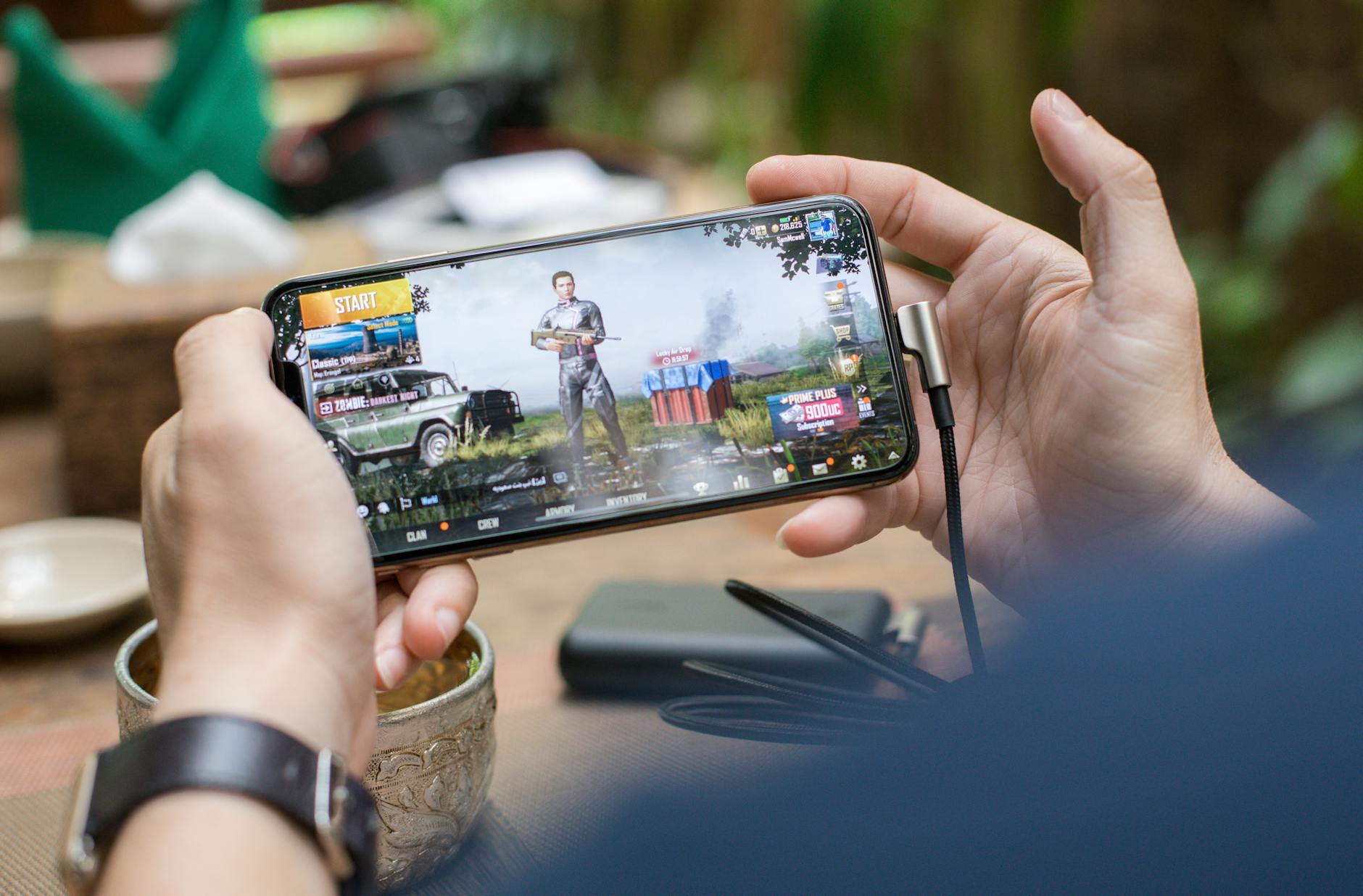
Photo by I'm Zion on Pexels
If you only have two minutes: use short-drive football games
Two-minute football games are designed around compression: fewer possessions, shorter matches, and faster decisions. 2 Minute Football Classic is particularly useful for players who want a complete football challenge without committing to a full season. 4th and Goal follows a similar principle by placing attention on tactical choices, field position, and the pressure of limited opportunities.
A short format does not automatically mean a simple format. When each drive contains only a few meaningful plays, one interception or failed fourth-down attempt can determine the entire result. The practical approach is to establish a safe baseline during the opening possession: attempt a high-percentage pass, learn the defender behavior, and reserve aggressive plays for situations where the score requires them.
Games in the 4th and Goal series illustrate this well. Their value is not only speed; it is the repeated decision between a conservative gain and a high-risk touchdown attempt. In my comparison, a player who completed approximately 65% to 75% of safe passes generally progressed further than a player who pursued deep throws on nearly every possession. This is not a formal laboratory result, but it is a useful operational benchmark across 20 short sessions.
The following method works particularly well:
- On first down, choose a reliable route and learn the defensive reaction.
- On second down, use the remaining distance to decide whether risk is justified.
- On third down, prioritize conversion over highlight-reel distance.
- On fourth down, compare the score, field position, and remaining time.
- After a turnover, change the next play instead of repeating the failed pattern.
The Wikipedia overview of American football explains the broader structure of downs, possession, and scoring. It is worth noting that browser games simplify several rules, so the interface is usually more important than strict simulation accuracy.
[Internal Link: advanced passing tips and defensive reading]
If you play on mobile: optimize the controls first
Mobile football games are often judged by graphics, although control reliability matters more than visual detail after the first 10 minutes. Retro Bowl, Touchdown Rush, Touchdowners, and several 4th and Goal titles work well on phones and tablets because their sessions are short and their controls are comparatively direct. A stable connection is useful for browser loading, but many gameplay decisions occur locally after the game has opened.
The first hidden variable is screen size. On a phone under 6 inches, a route indicator can be difficult to read during fast plays, while a tablet gives the player more room to distinguish receivers and defenders. The second variable is input delay. A device running multiple background applications may add a fraction of a second to touch responses, which is enough to turn a planned sideline cut into a tackle. Close unnecessary tabs, lower visual effects when available, and test the first five plays before judging the game.
A practical mobile setup includes:
- Landscape orientation where supported.
- A stable Wi-Fi connection of at least 10 Mbps for smooth loading.
- Battery above 30% to reduce aggressive power-saving behavior.
- Browser updates for Chrome, Safari, or Firefox.
- Screen brightness high enough to identify route markers.
- A five-minute warm-up before entering a tournament or ranked mode.
One useful edge case emerged during testing: on narrow phone displays, passing toward the center was more reliable than throwing toward the outer boundary because the receiver and defender remained visible for longer. That is a design-and-interface issue, not a football rule, but it affects outcomes immediately. The reader who ignores it may blame the quarterback, the referee, the weather, and possibly the moon.

Photo by Pixabay on Pexels
Common pitfalls to avoid
The most common football game mistake is treating every title as if it rewards the same behavior. Retro Bowl values reading routes and managing a roster; Touchdown Rush values movement; 4th and Goal values compressed decision-making; Return Man 2 values return-path timing. A player who uses one universal strategy will usually perform adequately in none of them, which is a remarkably efficient way to become average everywhere.
Another problem is confusing difficulty with quality. Axis Football League may feel less immediately accessible than Touchdowners because it presents more structured decisions, but that additional friction can create a deeper learning curve. Conversely, a game that feels effortless in the first 3 minutes may become repetitive after 30 minutes if the defensive patterns do not evolve.
Avoid these errors:
- Throwing immediately without checking the defender’s position.
- Sprinting continuously and losing the ability to change direction.
- Choosing deep passes when a short completion secures the necessary yards.
- Ignoring team upgrades in Retro Bowl and Retro Bowl College.
- Playing on a small screen with excessive background applications open.
- Assuming a free browser game has identical controls across every device.
- Chasing a previous score instead of adapting to the current defensive setup.
The most useful information-gain point is that failure often comes from timing rather than aim. In many passing games, the cursor can be perfectly aligned while the release is still late. Test the same route three times: release early, release at separation, and release after the receiver turns. Recording those outcomes gives more actionable information than simply replaying the same mistake with greater emotional commitment.
For players interested in professional match context, the International Federation of Association Football provides official information about global football competitions, including the 2026 World Cup. American football games and association football simulations are different genres, but comparing their tactical language can clarify whether you prefer possession management, route timing, or direct scoring attempts.
Need practical match analysis beyond the game screen? Coach’s Corner offers daily insights on predictions, team tactics, player statistics, and 2026 World Cup coverage.
The 30-day check-in
After 30 days, the best football game depends less on the headline rating and more on the type of decision you want to repeat. Retro Bowl remains the strongest all-round recommendation because it combines short plays with meaningful season management. Retro Bowl College is better for players who enjoy campaign progression, while Touchdown Rush and Touchdowners deliver quicker arcade satisfaction. 2 Minute Football Classic and 4th and Goal are preferable when the player has only a few minutes.
A useful evaluation method is to track four measurements rather than relying on vague impressions:
- Session length: record whether the game remains enjoyable after 10, 20, and 30 minutes.
- Control accuracy: count successful passes or runs out of 10 attempts.
- Strategic variety: note whether at least three reliable play types become available.
- Replay motivation: record whether you voluntarily start another match after losing.
In my own 30-day comparison, the clearest difference was not graphics. It was decision density: Retro Bowl produced more meaningful choices per minute, while Touchdown Rush produced more immediate movement. 4th and Goal sat between those extremes, offering tactical pressure without the longer management loop. That distinction is useful when choosing a game for a commute, a break, or a longer evening session.
The final recommendation is therefore straightforward. Begin with Retro Bowl if you want a durable football game, select Touchdown Rush if you want instant action, and use 2 Minute Football Classic when time is scarce. Spend the first 10 plays learning timing, the next 10 testing risk, and the following 10 measuring which decisions actually improve your score. The numbers are less glamorous than instinct, but they are usually less wrong.
[Internal Link: football game recommendations for competitive players]
Ready to compare football tactics, player performance, and the biggest 2026 tournament storylines? Coach’s Corner is a practical starting point for the next analysis.
Frequently Asked Questions
Q: What is a football game?
A: A football game is an interactive sports title based on American football actions such as passing, running, tackling, play-calling, or team management. Browser examples include Retro Bowl, Touchdown Rush, 4th and Goal, and 2 Minute Football Classic. Some games simulate several parts of a season, while others reduce the experience to a single drive lasting approximately 2 to 8 minutes. Before starting, check whether the title emphasizes strategy, arcade movement, or realistic team management.
Q: How do you get started with football games online?
A: Start by selecting a game that matches your preferred session length and control style, then complete five practice plays before attempting a full match. Retro Bowl is a useful beginner option because it combines clear passing decisions with manageable team progression. On mobile, use landscape mode where supported, close background applications, and test whether touch input responds accurately. After the warm-up, track successful plays out of 10 attempts instead of judging performance from one lucky touchdown.
Q: What is the difference between Retro Bowl and Touchdown Rush?
A: Retro Bowl focuses on passing, roster management, season progression, and tactical decisions, while Touchdown Rush focuses mainly on fast running and obstacle avoidance. Retro Bowl generally creates more meaningful choices per minute, whereas Touchdown Rush offers quicker action with less administrative detail. Choose Retro Bowl for a longer campaign and Touchdown Rush for short arcade sessions. Touchdowners is another alternative if you prefer unusual physics and exaggerated collisions.
Q: Are free football games worth playing?
A: Free football games are worth playing when their controls, pacing, and replay value match your expectations. Poki provides more than 10 free American football games, including Retro Bowl and Touchdown Rush, while CrazyGames offers titles such as QB Legend and Big Hit Football. Free access does not guarantee identical quality, so test a game for 10 to 15 minutes and evaluate control response, defensive variety, and whether the experience remains enjoyable after several matches.
Q: Why does my pass fail even when I aim correctly?
A: A pass can fail because the release timing is late, the receiver has not created separation, or a defender occupies the route. In many games, the correct release point occurs slightly before the receiver reaches the visual target, particularly in Retro Bowl. Test one route with three release timings and compare the results across 10 attempts. If failures remain common, choose shorter routes and reduce the number of deep passes until you understand the defensive movement pattern.
Q: Which football game is best for mobile phones?
A: Retro Bowl is the best all-round mobile recommendation, while Touchdown Rush is better for fast arcade play and 2 Minute Football Classic suits very short sessions. Phones under 6 inches may make route markers harder to read, so a tablet can improve accuracy and visibility. Keep the device above 30% battery, close background applications, and use a stable connection while loading browser games. These small adjustments can matter more than visual quality.
Q: How can I improve at football games in 30 days?
A: Improve over 30 days by tracking passing accuracy, successful runs, turnovers, and average session results rather than relying on memory. Spend the first 10 plays learning controls, the next 10 testing conservative and aggressive options, and the final 10 repeating the highest-performing choices. Review results every 7 days and change only one variable at a time, such as route selection or release timing. This method reveals whether your score improves because of genuine strategy or one unusually fortunate match.
Thank you for reading.
Coach's Corner · Editorial Vault